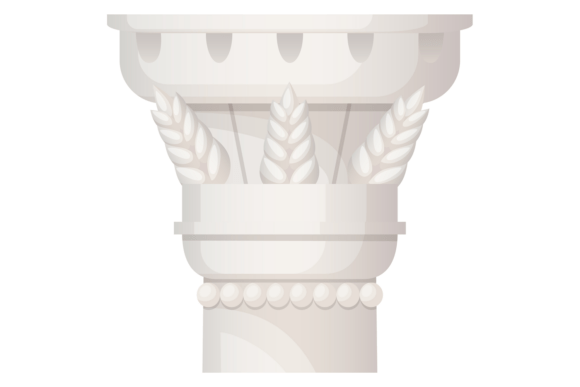
Ancient Order Pillar: Decorative Stone O
First Impressions: A Quiet Weight, Not a Loud Statement
When I opened Ancient Order Pillar. Decorative Stone O, my first thought wasn’t “Wow!”—it was “Ah. Yes.” This isn’t a flashy, trend-chasing icon. It’s a grounded, architectural shape with soft curves and subtle texture—like a weathered limestone column carved centuries ago, then gently simplified for clarity. The “O” feels intentional, not accidental: it’s the void within the pillar, the space that gives the form meaning. It reads as ceremonial, calm, and quietly confident—perfect for a boutique baby blanket, a linen apron for a herbalist, or a minimalist tote for a small shop owner who values substance over sparkle.
Real-Life Test: Embroidering It on a Linen Tea Towel
Last week, I stitched Ancient Order Pillar. Decorative Stone O onto a heavyweight, natural linen tea towel—no appliqué, just clean fill and satin stitch outlines. I used medium-density fill (not too dense, not too sparse) and a matte cotton thread in charcoal gray. On fabric, it held its shape beautifully: no bleeding, no distortion, no lost detail in the inner curve of the “O.” Customers who saw the finished towel at our local craft fair paused—not to snap a photo, but to *touch* it. That’s the quiet power of this design: it invites presence, not just attention. It felt handmade, intentional, and worth the price tag—not because it’s complicated, but because it feels *considered*.
Where It Shines (and Where It Asks for Care)
Ancient Order Pillar. Decorative Stone O excels in projects where restraint and resonance matter:
- Custom apparel: Crisp on a black sweatshirt cuff or a cream-colored baby onesie—especially when paired with a single-line monogram or tiny botanical accent.
- Embroidered patches: Its strong silhouette holds up well when cut and heat-applied to denim jackets or canvas bags.
- Nursery decor & holiday gifts: Stitched onto organic cotton pillow covers or wool-blend blankets, it reads as heirloom-quality—not trendy, but timeless.
- Boutique branding: Works beautifully as a subtle logo element on packaging tags, woven labels, or printable mockups for Etsy listings.
But it’s not universally forgiving. Use caution with:
- Small hoop sizes (under 4”): The inner “O” and pillar base need breathing room—test fit before committing to a tiny cap or wristband.
- Stretchy or thin fabrics: Like jersey or lightweight voile—the clean lines can warp if stabilizer isn’t layered thoughtfully.
- Dark fabric + light thread: The design’s subtlety means low-contrast combos (e.g., ivory thread on navy) may read as faint or indistinct unless stitch density is adjusted upward.
- Frequent-wash items: While the shape is stable, fine interior details (like tight corners of the “O”) benefit from slightly reinforced satin stitching—especially for baby embroidery or kitchen towels.
What It Does for Your Craft Business—Beyond the Stitch
This isn’t just another machine embroidery design. It’s a tone-setter. When your Etsy seller page features Ancient Order Pillar. Decorative Stone O on a hand-stitched linen pouch, customers subconsciously register care, craftsmanship, and cohesion—even before reading your story. It supports brand consistency without shouting; it elevates a simple tote bag into a personalized gift with quiet gravitas. For creative entrepreneurs, it’s versatile enough for digital product previews (SVG and transparent PNG make clean mockups easy), yet substantial enough to anchor physical products like embroidered patches or boutique aprons.
Practical Designer Notes You’ll Actually Use
Before you load Ancient Order Pillar. Decorative Stone O into your machine or list it in your shop:
- Test on scrap fabric first—same weight and weave as your final project. Linen behaves differently than cotton duck; knits behave differently than twill.
- Check thread color contrast in natural light. What reads clearly on screen may disappear on dark fabric—or overwhelm on pale linen.
- Review stitch density. Too dense? It’ll pucker. Too light? The “O” may look hollow or unfinished. Adjust based on fabric texture and end use.
- Confirm hoop size compatibility. Don’t assume it fits your standard 4×4—it may need 5×7 for optimal clarity, especially if adding text.
- Inspect small details at 200% zoom. Is the inner edge of the “O” smooth? Are corners crisp? If the original file is vector-based (EPS/SVG), scaling is flexible—but raster files (JPG/PNG) lose fidelity when enlarged.
- Test black-and-white mockups. Many buyers imagine designs in monochrome first—does it hold up?
- Use proper stabilizer. Tear-away works for stable wovens; cut-away adds longevity for stretchy or delicate fabrics.
- Verify licensing. Since this is an Illustrations-category Graphics asset, confirm whether commercial use (selling finished embroidered items or digital embroidery files) is permitted—don’t guess.
Final Thought: Less Icon, More Anchor
Ancient Order Pillar. Decorative Stone O won’t dominate a collection—but it will ground one. It’s the kind of embroidery file that makes customers say, “I didn’t know I needed this… but now I can’t imagine my shelf, my nursery, or my small shop without it.” It rewards thoughtful execution, respects the material it’s stitched on, and quietly signals that the maker behind it understands balance, history, and the weight of a single, well-placed shape. Whether you’re building a craft business, launching an Etsy line, or stitching a meaningful holiday embroidery for someone you love—this design earns its place. Just give it the care it deserves, and it’ll return the favor in texture, trust, and timeless appeal.